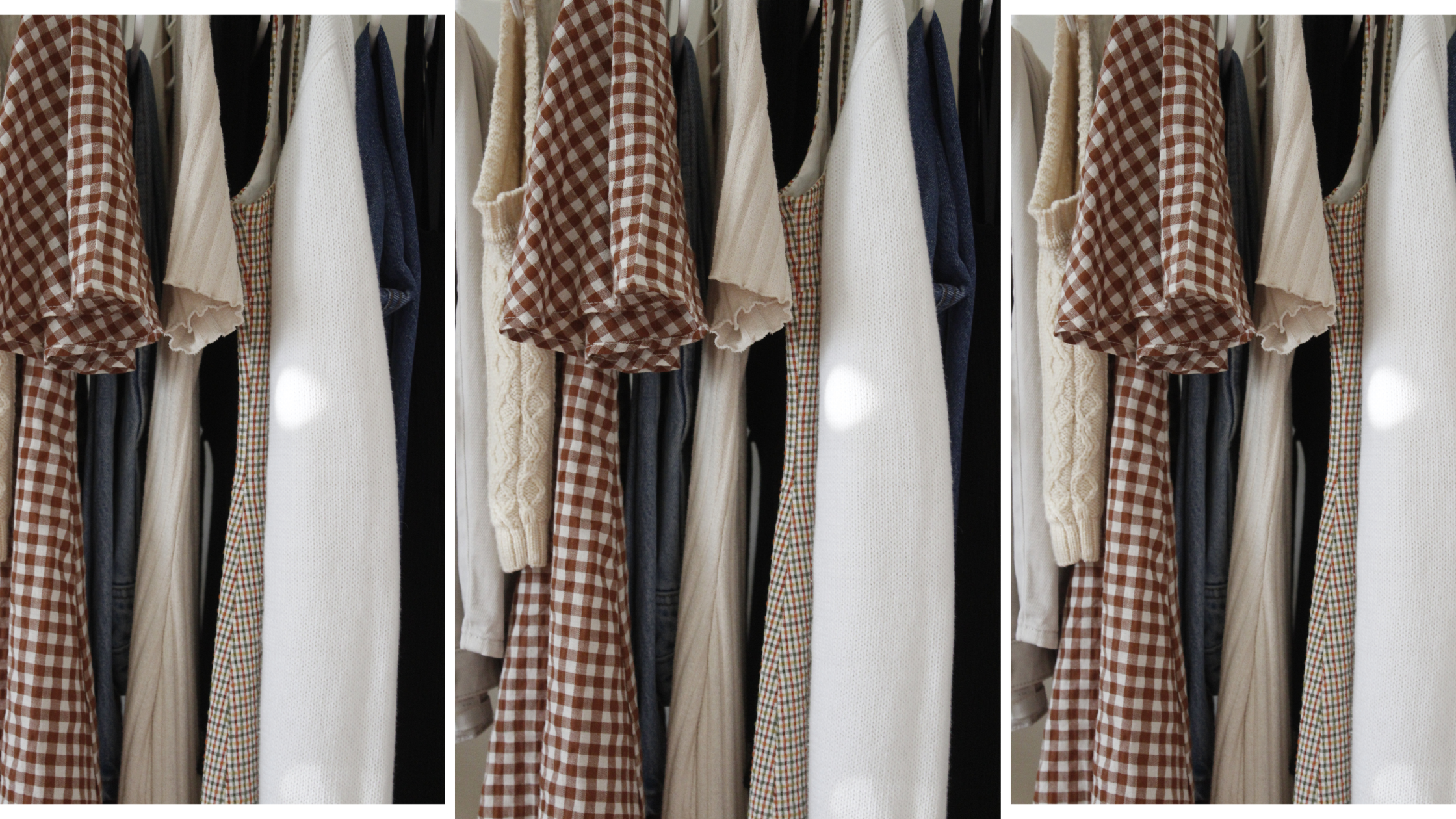

If your bedroom floor is buried beneath a pile of “maybe I’ll return this” packages and you still feel like you have nothing to wear, your closet may not be asking for more clothes. It may be asking for more imagination.
You know the scene. It is 11:45 on a Tuesday night. You are four episodes into a comfort show you have already watched three times, and your thumb has wandered into a shopping app. Into the cart goes a mesh top you might wear once, the silver bag currently following you around TikTok, and a lip product suspiciously similar to three you already own.
The package arrives. For a moment, opening it feels like an event. Then the new clothes join everything else in your closet—and the restless feeling returns.
Buying something new can create anticipation, possibility, and a temporary sense of reinvention. But when shopping becomes the activity you reach for whenever you feel bored, stuck, stressed, or uninspired, the purchase cannot solve the feeling that sent you looking for it.
You may not need a wardrobe overhaul. You may need a capsule vibe: a small, flexible style world built around how you want to feel, not how many things you are allowed to own.
Why do people buy clothes when they are bored? Online shopping offers novelty, anticipation, and an easy action to take when real life feels flat. Research has found that boredom can encourage impulse fashion purchases, while clinical research distinguishes occasional emotional shopping from compulsive buying that causes distress or disrupts daily life.
How can you stop? Add time between wanting and buying, identify the feeling or experience you are actually seeking, and create new combinations from clothes you already own. A capsule vibe can help by giving your wardrobe a clear mood, practical boundaries, and enough personality to remain interesting.
The problem is not that you secretly lack discipline or that your “dopamine receptors are fried.” That phrase sounds satisfying, but it reduces a complicated habit to bad internet neuroscience.
The more accurate explanation is also more useful: shopping can offer a quick combination of novelty, anticipation, fantasy, and relief.
For a few minutes, you are not simply buying a jacket. You are imagining the person who wears it. She makes plans. She knows where the good coffee is. She never discovers a receipt in the bottom of a bag three months after the return window closes.
The fantasy arrives before the clothes do.
Research on online fashion shopping has found a relationship between boredom and impulse buying. Clinical research also shows that problematic shopping may be used to escape negative feelings, including anxiety, tension, and boredom. That does not mean every late night purchase is evidence of an addiction. Compulsive shopping involves persistent, excessive behavior that causes meaningful distress or impairment, not occasionally buying trousers after a difficult week.
Still, the ordinary loop is worth noticing:
You feel bored, unsettled, or dissatisfied.
Browsing gives you stimulation and possibility.
Buying creates a short-lived sense of completion.
The item arrives without changing the original feeling.
You begin looking for the next thing.
The purchase was real. The transformation was mostly imagined.
An overflowing closet should theoretically give you endless options. In practice, it can make getting dressed feel strangely difficult.
When your wardrobe is filled with pieces bought for different fantasy selves, fleeting trends, and occasions that rarely happen, it stops functioning as a coherent collection. You have plenty of clothes but very few reliable relationships between them.
Three things begin to happen.
Fast-moving aesthetic cycles can make a complete identity appear purchasable. One week you are being invited to become a coastal grandmother; the next, a downtown office siren with no apparent office.
Trying a trend can be playful. The trouble begins when every new aesthetic makes the last version of you feel obsolete. If most of your inspiration comes from the same viral hauls, your wardrobe can start to resemble the algorithm more than the person wearing it.
The sequined skirt is not the problem. The problem is owning twelve versions of clothes for rooftop parties when your real week consists of working, walking the dog, getting groceries, and having dinner with friends.
Good personal style is not built by ignoring your real life. It makes your real life feel more like yours.
The pieces you love may already be in your closet, buried between garments that almost fit, almost work, or belonged to a mood that lasted eleven days.
More options do not always create more creativity. Sometimes they simply make it harder to see what is good.
A capsule vibe is a flexible wardrobe framework organized around a mood, identity, or emotional quality rather than a strict number of garments. It combines practical staples with recognizable textures, silhouettes, colors, and signature details that make your clothes feel like you.
A traditional capsule wardrobe usually emphasizes a limited collection of interchangeable pieces. That can be genuinely helpful, but online versions sometimes flatten the idea into a prescribed row of beige sweaters, white shirts, straight-leg jeans, and loafers.
There is nothing wrong with neutrals. There is something wrong with treating someone else’s neutrals as the price of being organized.
A capsule vibe keeps the useful part, cohesion and removes the aesthetic obedience. Your wardrobe could feel romantic, sharply tailored, sun-faded, bookish, playful, gothic, sporty, or gloriously difficult to summarize. It does not need to contain exactly 30 pieces. It needs enough consistency that getting dressed feels intuitive and enough personality that repeating clothes does not feel like surrender.
Do not begin with a shopping list. Begin with the way you want to feel.
Choose three words you want your clothes to communicate. For example:
relaxed, intelligent, undone;
romantic, grounded, slightly strange;
polished, playful, comfortable;
dramatic, feminine, unfussy.
“Chic” is usually too broad. “Like I own a tiny bookshop near the sea” may be impractical as a mortgage plan but excellent as creative direction.
Before buying or keeping an item, ask whether it supports at least two of your three words.
Anchor pieces are the garments that establish your style quickly and work with much of what you already own.
They might include:
a beautifully worn leather jacket;
wide-leg trousers that fit properly;
a sweeping trench coat;
dark jeans and an oversized white shirt;
a romantic dress toughened up with boots;
a substantial cardigan that makes everything feel intentional.
An anchor piece does not need to be expensive, vintage, or objectively timeless. It needs to work hard in your actual life.
Color is not the only way to make a wardrobe cohesive. Texture can make even a simple outfit feel dimensional.
Notice which combinations repeatedly attract you: heavy cotton with polished metal, worn denim with lace, wool with silk, linen with leather, or crisp poplin with soft knits.
Your texture language gives basic outfits atmosphere without requiring a new micro-trend every week.
A signature detail is a repeatable element that makes your style recognizable.
It could be:
sculptural silver jewelry;
vintage gold hoops;
a red lip;
patterned socks with loafers;
a silk scarf;
a particular perfume;
an oversized tote that always contains a paperback.
Repetition is not the enemy of personal style. Repetition is often what creates it.
Look at how you actually spend your time, then create a few combinations that work for those situations.
For example:
wide-leg trousers + fitted tee + substantial jewelry;
slip dress + cardigan + boots;
jeans + oversized shirt + loafers;
soft skirt + sweatshirt + long coat.
Photograph each successful combination. The next time you claim to have nothing to wear, consult the evidence before consulting the internet.
You do not need to perform a dramatic closet purge or promise never to enjoy shopping again. You need enough distance to distinguish a genuine addition from a momentary urge.
When you want a nonessential item, save it instead of buying it immediately. Wait at least 72 hours.
For larger or trend-driven purchases, wait 30 days. If the item still feels useful after the initial excitement has passed, reconsider it with clearer eyes.
Before checking out, ask: What do I think this item will give me?
Is it novelty? Confidence? A reason to go somewhere? A sense that a new season has begun? Relief after a frustrating day?
Then try meeting that need directly. Make a plan. Change your environment. Style an outfit you have never worn. Visit somewhere new. Invite someone to dinner. Begin the thing you keep imagining the new clothes will help you become.
Do not ask whether the item is beautiful. Ask whether you can create three complete outfits with pieces you already own.
If the purchase requires different shoes, another bra, a particular bag, and a social life you do not currently have, it is not one purchase. It is the opening scene of a financial miniseries.
Delete saved payment information. Unsubscribe from promotional texts. Remove retail apps from your phone. Mute accounts that make your current life feel perpetually inadequate.
You are not banning yourself from shopping. You are making shopping a decision again.
Write down each item you wanted and the price. Check the list a month later.
Most of the objects will have lost their emotional charge. Add the amount you did not spend. Watching the total grow can be more satisfying than opening another package you barely remember ordering.
When you are bored with your clothes, create novelty through styling before acquisition.
Try one of these:
Wear an evening piece during the day.
Build an outfit around the item you “never know how to style.”
Re-create a saved outfit using only similar shapes or colors.
Swap the expected shoes for the least obvious pair.
Layer a shirt, dress, or knit in a way you have not tried.
Ask a stylish friend to build three outfits from your wardrobe.
Photograph ten combinations so they become reusable formulas.
Mend, tailor, dye, crop, or alter something that is almost right.
The goal is not to force yourself to love every item. It is to learn whether the wardrobe is truly missing something before adding to it.
Your clothes should support a life you genuinely want to participate in. They cannot create that life on their own.
A new dress may make dinner feel more special. It cannot make you text the friend, book the table, or leave the house. A leather jacket may help you access a bolder version of yourself. It cannot take the risk on her behalf.
Style can be a tool for self-expression, pleasure, memory, and play. It becomes less satisfying when it has to perform the full-time job of giving you an identity.
Build the life. Wear the clothes into it.
Go to your closet and choose three pieces you have not worn in six months because you were saving them for a special occasion.
Style one of them for an ordinary day. Wear the dress to the grocery store. Put on the good earrings before working from home. Carry the dramatic bag to pick up coffee.
Stop saving your best energy for an imaginary future. Your actual Wednesday is allowed to have a costume department.
Shopping provides novelty, anticipation, and an immediate activity when you feel restless or emotionally flat. The excitement may offer temporary relief, but it does not address the boredom itself, which is why the urge can return soon after the purchase.
Wait at least 72 hours before buying nonessential clothes, remove saved payment information, unsubscribe from promotional messages, and require every new item to work in at least three outfits using clothes you already own.
A capsule wardrobe is a limited collection of versatile clothes designed to work together. A capsule vibe uses the same principle of cohesion but organizes the wardrobe around feelings, textures, silhouettes, and signature details rather than a fixed number of items or a neutral aesthetic.
Study the clothes you already wear most often, choose three words describing how you want to feel, and collect references from different decades rather than one current trend. Look for repeated shapes, colors, textures, and details across your inspiration.
No. Enjoying shopping or occasionally buying something impulsively does not necessarily indicate a disorder. Compulsive shopping involves persistent, excessive behavior that causes distress or interferes with finances, relationships, work, or daily functioning. Consider speaking with a qualified mental-health professional if shopping feels uncontrollable or is causing harm.
Sources
Sundström, Balkow, Florhed, Tjernström, and Wadenfors, “Clicking the Boredom Away—Exploring Impulse Fashion Buying Behavior Online,” Journal of Retailing and Consumer Services.
Black, D. W., “Compulsive Shopping: A Review and Update,” Current Opinion in Psychology, 2022.